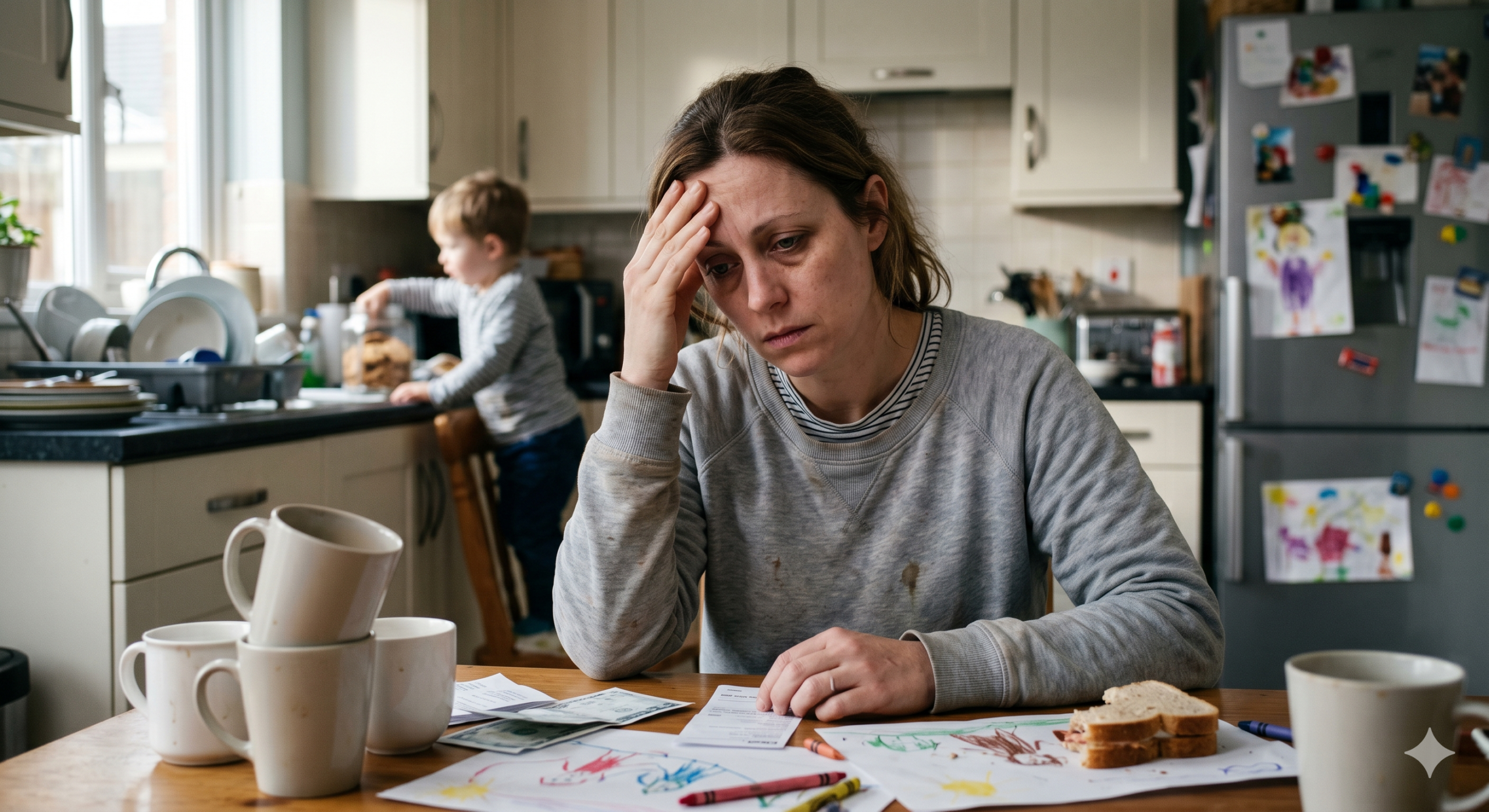
If you’re a parent, then you’ve experienced dozens of situations just like this:
You’re getting the kids ready for bed, and you’re helping them put on their pajamas, and then you see a red dot on your child’s back. Something you haven’t seen before. Then you check and recheck again. You try remembering whether it was there this morning. You stare at it for the next 10 minutes. And now you’re all worried and can’t sleep because that red dot could mean so many things. So you take out your phone and start Googling it, and your anxiety gets so much worse.
This is pretty much what health anxiety looks like once you become a parent. It’s not an obvious panic that comes and goes. Oh, no, that would be too easy.
This type of anxiety is slow, and, well… it grinds you down.
And it’s not just the child, either; the way YOU look at your own health changes. Before you had kids, if you had a headache, you’d take a Tylenol and move on.
Now, when you have a little one who depends on you, it can be quite overwhelming.
Why Everything Feels Like ‘Risk’ Now
Fever? Is it 101? Well, it seems like you’re taking the day off and watching TV until you get better.
Actually, this fever isn’t even all bad.
That’s how things used to work when you didn’t have kids, but it’s different now.
If you have a fever now, all sorts of things go through your head, like, is this a virus, an ear infection, will your kid(s) catch it from you, do you need to go to the doctor, etc.
This happens because your brain knows that somebody’s safety is your main job.
And it’s one of the most exhausting things ever. Even if you’re alright, you never stop checking on your kid. You check if they’re breathing at night or if they have a rash; you check on it every hour. You take a video of your toddler walking because they’re cute, and then you rewatch that video over and over to see if that particular kind of wobble is normal or not.
Modern parenting makes this even worse because social media and online forums are full of parents who describe the worst-case scenarios.
Medical Questions Hit Harder Now!
Your kid has a weird symptom, but the doctor said, “Let’s wait and see what happens,” or something along those lines.
And that’s not something ANY parent wants to hear. Your child is sick, so you want an explanation as to why, and you also want them to get better. NOW.
But you’re forced to wait, which means you’ll worry 24/7, and during that time, you’ll imagine all the things that could be wrong.
It’s even worse if you had complications during delivery because it might be years until you finally figure out exactly what’s wrong. And it could be pretty much anything (e.g., seizure disorders, hearing loss, cognitive impairment, problems with vision, even cerebral palsy, etc.)
Depending on where you live, this experience can be very different.
If you live in a rural area, then you don’t really have access to a lot of specialists close to you, so you’ll have to travel for therapies and appointments. Possibly even lawyers.
Speaking of lawyers, it’s not uncommon for them to get involved. Even if you’re in a big city like Chicago, where it’s easy to get in touch with many specialists, if a medical mistake causes a condition like cerebral palsy, it’s advisable to contact a cerebral palsy malpractice attorney in Chicago.
Your child’s health is your main priority, of course, but you also want to hold medical professionals accountable for potential mistakes.
Plus, medical care IS EXPENSIVE; who’s going to pay for that doctor’s mistake or neglect? Are you supposed to pay? No, you’re not.
How to Calm Down
The anxiety isn’t going anywhere, but there are ways to live your life without anxiety taking over it.
Here’s how.
Get More Comfortable With Not Knowing Everything
After some time has passed, a random cough won’t make you spiral. Not because you don’t care, but because you’ve seen enough of it to know that a kid coughing usually doesn’t mean anything.
You know from experience when your kid needs a doctor, and when they don’t.
Fewer Health Decisions to Make Alone
If you try to figure everything out on your own, that’s a free ticket to the crazy train. And as a parent, you don’t want to be on the crazy train. A partner can help you, and so can a pediatrician. Provided the latter answers their emails, of course.
Even a mom friend who’s been through the same thing can take some of the edge off.
Routines are a Good Thing
If your life’s a mess or you’re living hecticly, that’s going to lead to your brain starting to expect bad things to happen all the time. While this is normal, it’s not good. Nor is it healthy.
And this has nothing to do with someone being negative. Even optimists would fall into this trap.
So what you can do here to help not fall into that negative cycle, is you can start creating routines (e.g., regular bedtime times, planned checkups, brushing teeth, breakfast time, dinner, taking the kids to the park every saturday, etc.).
This habit helps replace chaos with order, and order is a great remedy for panicking.
Conclusion
For most people, when they become parents, all they know they’ve learned either from movies (which are SO unrealistic) or from their parents/grandparents. That’s it. But the problem is, you only saw a glimpse of it all. And what you never got a chance to see is what goes on in your parents’ minds.
And now you’re the parent, and you’re NOT ready.
You now realize that a good chunk of parenting has to do with googling all kinds of symptoms, taking pictures of poop, and analyzing it, and even though that might sound crazy to an outside observer, that’s just how it is. As a parent, you become the worryer (especially moms).
And while all that anxiety and paranoia ARE helpful in keeping your child safe and healthy, they DEFINITELY aren’t comfortable.
So, what’s important is to make peace with the newfound changes and find ways to deal with them in a healthy manner(e.g., learning how to breathe, how to calm down, etc., etc.).