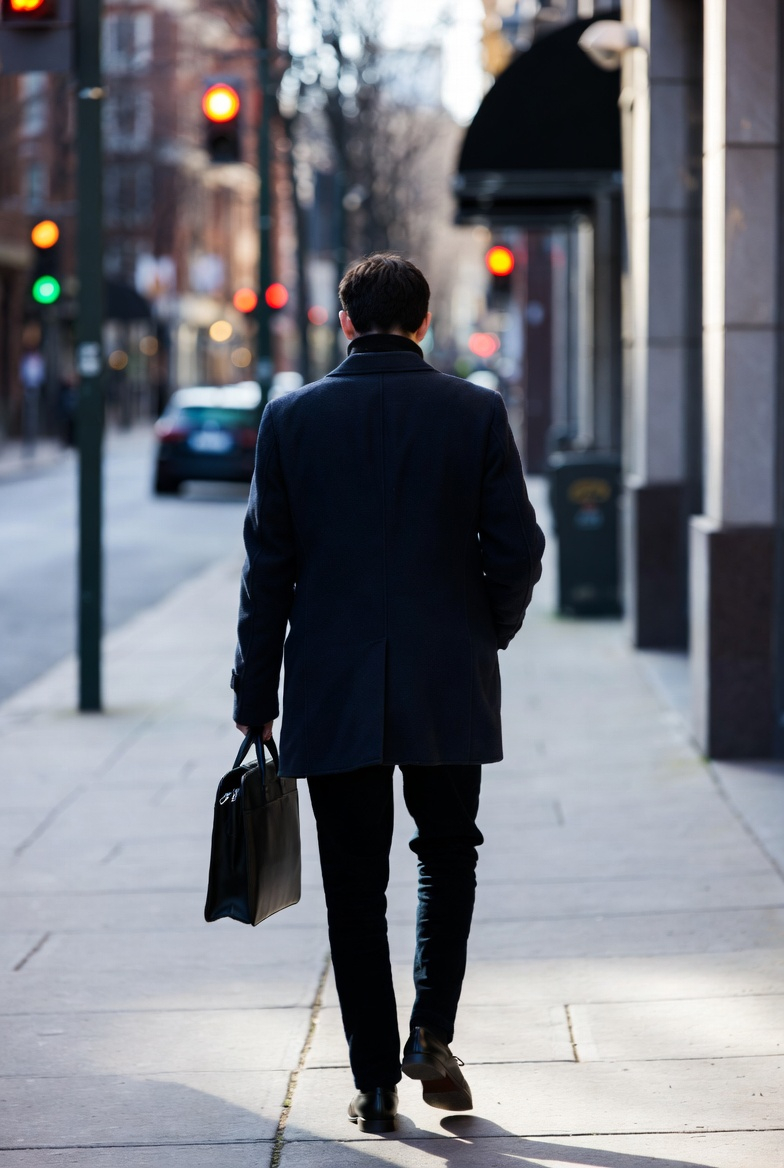
Ambition has a way of narrowing your focus. You think about output, discipline, recovery time, sleep quality, step counts, and deep work hours. You fine-tune routines. You measure progress. You build momentum and guard it carefully.
What rarely makes the list is protection.
High-performers tend to assume that control equals safety. If you train consistently, think clearly, plan your week, and stay alert, things will hold together. That belief works most of the time. Until it doesn’t.
Performance unfolds inside an environment you don’t fully control. You can be strong, prepared, and focused, and still find yourself dealing with a distracted driver at a crowded intersection. You can follow every health protocol and still face something that disrupts your routine, your income, or your independence.
Wellness culture celebrates optimization. It rarely highlights insulation. Anyone building something meaningful is also building something vulnerable. Progress relies on continuity. Continuity relies on stability. Stability relies on more than mindset.
High Performance Creates Blind Spots
Drive and discipline can quietly distort your sense of risk. When you’re used to solving problems through effort, you start believing effort applies everywhere. Train harder. Focus longer. Plan better. Adjust faster.
It doesn’t erase external variables.
You can control your sleep schedule. Your training plan. Your spending habits. You cannot control traffic patterns in downtown Chicago at rush hour. You cannot control whether a driver in Manhattan glances at their phone for two seconds too long. You cannot control a delivery vehicle turning wide in Los Angeles while you’re crossing on a walk signal.
Urban environments widen the gap between personal discipline and exposure. Cities like Chicago are built for movement. Dense intersections. Heavy pedestrian flow. Rideshare traffic. Cyclists. Buses. Delivery trucks. The same energy that creates opportunity also increases unpredictability.
Ambition thrives in proximity. Risk does too.
A wellness safety net starts with one clear realization: performance doesn’t eliminate exposure. It makes disruption more expensive.
The Urban Risk High-Performers Rarely Account For
In cities like Chicago, walking is part of daily life. The Loop fills before 9 a.m. Side streets carry commuters, cyclists, delivery vans, and rideshare drivers. The rhythm feels efficient and alive.
Density changes the math.
Chicago isn’t unique. New York sees similar pressure at busy intersections in Midtown and Brooklyn. Los Angeles blends heavy car culture with expanding pedestrian zones. Boston’s compact streets create tight crossings where visibility shifts quickly.
Most days, awareness feels sufficient. You look both ways. You stay alert. You move deliberately.
Then a split second goes wrong.
Medical care. Missed work. Insurance questions. Lingering pain. A sudden shift in financial stability.
In a city like Chicago, where pedestrian traffic and vehicle density intersect daily, structured support becomes part of responsible recovery. Chicago Auto Injury Lawyers’ pedestrian settlement guidance can help bring clarity to situations where costs and long-term impact begin to compound. When health and income are affected, clarity becomes practical, not optional.
Handling everything alone sounds admirable. It rarely works that way in reality.
Protection Sustains Performance
Momentum feels powerful when uninterrupted. Clear mornings. Consistent training. Compounding work.
Disruption exposes how much that momentum depends on continuity.
An injury doesn’t just affect mobility. It reshapes confidence and drains attention. Even when you look fine, capacity can shift. That gap between appearance and lived experience can be disorienting, especially when the invisible decline in day-to-day quality of life after an injury lingers long after visible damage fades.
Protection preserves continuity. When systems absorb part of the shock, your energy returns to rebuilding instead of scrambling.
Urban living amplifies opportunity and exposure at the same time. Chicago’s intersections. New York’s traffic density. Los Angeles’ car-heavy corridors. You can’t eliminate every variable. You can make sure your response isn’t improvised.
A wellness safety net keeps ambition sustainable.
The Four Layers of a Wellness Safety Net
A safety net is layered.
Physical readiness sits at the surface. Strength training. Mobility work. Cardiovascular health. Regular checkups. A resilient body recovers faster.
Financial cushioning becomes visible when it’s tested. Emergency savings. Disability coverage. A realistic understanding of how long life remains stable if income pauses. Money stress turns discomfort into urgency. Financial steadiness gives recovery breathing room.
Legal clarity matters when responsibility and cost intersect. Knowing your rights. Understanding liability. Access to credible guidance when unexpected expenses appear. Confusion drains attention. Clarity protects it.
Environmental awareness grounds everything. Chicago’s pedestrian corridors differ from Houston’s car-dominant roads. San Francisco’s hills create different visibility issues than wide suburban streets. Awareness lowers complacency.
Together, these layers form insulation between one unexpected moment and total disruption.
Why Real Resilience Requires Infrastructure
Resilience gets romanticized. It’s framed as grit and toughness.
Resilience without structure collapses under pressure.
When a pedestrian injury happens in a major city, the physical impact is only part of the story. Federal public health data on pedestrian safety shows that thousands of pedestrians are killed and tens of thousands are injured in traffic crashes each year in the United States, with a higher risk in densely populated urban areas.
Those numbers represent interrupted careers. Strained finances. Months of recovery.
Infrastructure determines whether the disruption stays contained.
If medical care is accessible, healing begins sooner. If savings exist, stress remains manageable. If legal questions are resolved early, uncertainty shrinks.
In cities like Chicago, New York, or Los Angeles, where pedestrian activity intersects daily with heavy vehicle traffic, having strong systems in place reflects foresight.
Resilience is built long before it’s tested. When the framework exists, setbacks feel contained rather than catastrophic.